24 March 2015

Sulon Cortex HMD

The Sulon Cortex essentially turns your surrounding environment into an augmented or virtual reality experience thanks to the sensors on the headset that are spatially-aware of your surroundings. Unlike the Oculus Rift which requires a PC, Sony's Project Morpheus which needs a PS4 and the Samsung Gear VR which requires a Galaxy Note 4 phone, the final build of the Cortex promises an great experience so you can walk around the scene you're in.


The HMD can work both indoors and outdoors and supposedly doesn't need extra cameras or sensors nor is it affected by ambient light because it can spatially map environments in real time. There are also two different types of HMD's. The wired headset has a large, eight-balls sensor on the back, which also makes you look even weirder than usual for VR/AR devices. You can customize the colors of the hexagonal lights on the sides to blue, green, pink and purple.

More information:
17 March 2015

Real-Time Holographic Displays

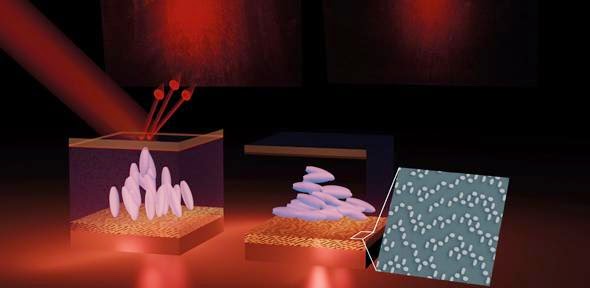
Researchers from the University of Cambridge have designed a new type of pixel element and demonstrated its unique switching capability, which could make three-dimensional holographic displays possible. Real-time dynamic holographic displays, long the realm of science fiction, could be one step closer to reality, after researchers from the University of Cambridge developed a new type of pixel element that enables far greater control over displays at the level of individual pixels. As opposed to a photograph, a hologram is created when light bounces off a sheet of material with grooves in just the right places to project an image away from the surface. When looking at a hologram from within this artificially-generated light field, the viewer gets the same visual impression as if the object was directly in front of them.


Currently, the development of holographic displays is limited by technology that can allow control of all the properties of light at the level of individual pixels. A hologram encodes a large amount of optical information, and a dynamic representation of a holographic image requires vast amounts of information to be modulated on a display device. A relatively large area exists in which additional functionality can be added through the patterning of nanostructures to increase the capacity of pixels in order to make them suitable for holographic displays. Normally, devices which use plasmonic optical antennas are passive, which is essential for real-world applications. Through integration with liquid crystals, in the form of typical pixel architecture, the researchers were able to actively switch which hologram is excited and there which output image is selected.

More information:

16 March 2015

Visual Turing Test

Computers are able to recognize objects in photographs and other images, but how well can they understand the relationships or implied activities between objects? Researchers have devised a method of evaluating how well computers perform at that task. Researchers from Brown and Johns Hopkins universities have come up with a new way to evaluate how well computers can divine information from images. The team describes its new system as a "visual Turing test," after the legendary computer scientist Alan Turing's test of the extent to which computers display human-like intelligence. Traditional computer vision benchmarks tend to measure an algorithm's performance in detecting objects within an image, or how well a system identifies an image's global attributes.


To be able to recognize that the image depicts two people walking together and having a conversation is a much deeper understanding. Describing an image as depicting a person entering a building is a richer understanding than saying it contains a person and a building. The system is designed to test for such a contextual understanding of photos. It works by generating a string of yes or no questions about an image, which are posed sequentially to the system being tested. Each question is progressively more in-depth and based on the responses to the questions that have come before. The first version of the test was generated based on a set of photos depicting urban street scenes. But the concept could conceivably be expanded to all kinds of photos, the researchers say.

More information:

07 March 2015

Tips for AR in Higher Education

Recent research conducted by Jisc showed that students were more serious than ever about technology, with nearly a third (32 %) saying tech facilities played a part in their choice of university.  Combine that statement with the fact that students are open to innovative ways of learning, with more than a third interested in virtual lectures (37%) and dedicated mobile apps (35%) to help them study, and it is easy to understand why universities are keen to up their tech game. The most common reason for AR remaining on the peripheries in higher education is not lack of appetite, but rather a general lack of knowledge about how to get these programmes off the ground.

 
Here are five tips to get you started: (a) Consider the application: AR works especially well where it is difficult to expose students to real-life environments. (b) Simplify the subject material: If you work in a maths or science discipline you might not think AR is applicable to you, but actually it’s an excellent conduit for conveying abstract concepts. (c) Visualise your users: Think about who will be using the app and what learning environments they are used to. (e) Test your ideas: If you fail to consult them during the development cycle you could deliver something that is a long way removed from what they were expecting.

More information:

02 March 2015

Vive VR HMD

HTC has just announced the Vive, a virtual reality headset developed in collaboration with Valve. It will be available to consumers later this year, with a developer edition coming out this spring. The company has promised to have a significant presence at the Game Developers Conference next week, where devs will have a chance to play with Valve's VR technology.


The Vive Developer Edition uses two 1200 x 1080 displays that refresh at 90 frames per second, eliminating jitter and achieving photorealistic imagery according to HTC. The displays are said to envelope your entire field of vision with 360-degree views. The company says in a press release that it's the first device to offer a full room-scale experience.

More information:

01 March 2015

Prosthetic Leg Sees Ahead

The Michigan Technological University mechanical engineer and his team have already developed a prototype that can provide a range of motion that rivals a natural gait. Next, they aim to give their robotic ankle something different: eyes. Researchers are developing an artificial vision system. The key components are a low-cost camera and a computer-controlled actuator, which adjusts the ankle's position through a system of cables.


The camera can identify the profile of the ground, while the computer knows where the next footstep will be, based on how the user is moving the leg. Then the computer analyzes the information from the camera and applies the correct angle and stiffness to the ankle, just as you would with your biological foot and ankle. Thus, the ankle could adapt precisely, whether the user is climbing stairs or striding over a pothole.

More information: