04 May 2020

HTC VR Remote Collaboration for Business

Immersive technology’s applications have been enhanced with the release of a free beta version of the new remote collaboration and meeting app for business from HTC Vive. Vive Sync was built specifically for business use to improve communication and productivity. The solution is particularly compelling when many countries around the world remain under lockdown and international travel has all but ceased. The VR collaboration tool allows internal and external teams of up to 30 people to meet in a virtual space and hold internal creative meetings, online classroom discussions, virtual press conferences and remote sales presentations. The app is integrated with Microsoft OneDrive so that participants can easily share materials directly from their server, including video files, PowerPoint presentations, and 2D and 3D assets. 


Information can be shared outside of Vive Sync by taking screenshots or via voice-to-text note-taking. A companion Vive Sync Avatar Creator mobile app, which is available on Apple App Store and Google Play, enables participants to create personalised and dynamic avatars built in their likeness to serve as their digital representation. The full-body tracking capabilities of HTC Vive headsets enable participants’ avatars to communicate their body language. Vive Sync also supports Tobii eye tracking for more natural interactions with virtual colleagues or clients, capturing participants’ eye movements to bring meetings to life. Headsets such as Vive Pro Eye offer this technology embedded directly into the headset. HTC Vive said planned updates include third-party device support for Oculus Rift, Quest, Windows Mixed Reality and Valve Index headsets, as well as host control, session recording, and non-VR PC participation.

More information:

02 May 2020

Natural Gas VR Training

US-based VR training developer PIXO VR has released a new suite of modules for workers in natural gas, after making a big impression in the automotive industry earlier this year. The new suite of immersive training modules for the natural gas industry from PIXO VR, whose platform was used to develop simulations for the Ford technician training programme in February, are available on the State of Michigan-headquartered company’s enterprise platform. The new training modules cover critical tasks within the natural gas industry, such as leak investigation, pipeline right-of-way patrollings and appliance inspection. 


PIXO VR has also enhanced its natural gas leak emergency response module, which was released late last year. PIXO VR’s multi-user training modules feature randomised scenarios that expose trainees to millions of situational variables that test real-time decision making. They can be conducted without a headset, using a desktop computer-based version on an entirely remote basis. They were developed in partnership with GTI, development and training organisation, and were funded by local distribution companies and Operations Technology Development (OTD), a consortium whose membership provides natural gas service for tens of millions of customers in North America.

More information:

01 May 2020

VR Home Physiotherapy

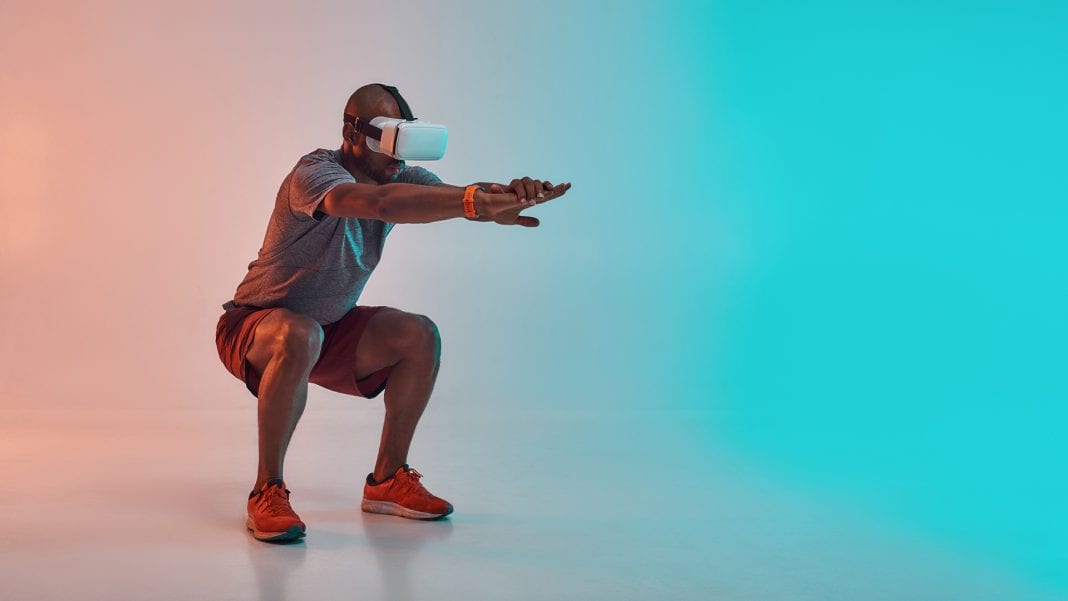
Researchers have combined Virtual Reality (VR) and 3D motion capture technology which could help physiotherapy patients to complete their exercises at home. Currently, prescribed physiotherapy is often undertaken at home and patients rarely receive any guidance other than a leaflet of sketches or static photographs to instruct them how to complete their exercises. This leads to poor adherence, with patients becoming anxious about not getting the exercise right. The combination of virtual reality technology combined, and 3D motion capture allows real movements to be accurately translated onto an avatar that can be viewed in a virtual environment. The researchers at the Institute of Digital Healthcare, University of Warwick are investigating whether this technology can be used to provide guidance to physiotherapy patients, by providing a virtual physiotherapist in the home to demonstrate exercises. 


For the study, the researchers investigated whether people were able to accurately co-ordinate and follow the movements of an avatar in a virtual environment, asking participants to step in time with an avatar viewed through a VR headset. The researchers slowed down or speeded up one of the avatar’s steps, such that the participants would have to correct their own stepping movement to stay in time. The team measured whether this influenced the participants timing. They found that participants struggled to keep in time if only visual information was present. However, when they added realistic footstep sounds in addition to the visual information, the more realistic multisensory information allowed participants to accurately follow the avatar. Now researchers plan to investigate other types of movements working closely in partnership with physiotherapists, to establish the areas of physiotherapy that will benefit most from this technology.

More information:

21 April 2020

Insightful Ideas Can Trigger Orgasmic Brain Signals

Coming up with a great insight can cause pleasure like an orgasm, according to researchers. The eureka moment triggers neural reward signals that can flood some people with pleasure, suggesting it's an evolutionary adaptation that fuels the growth of creativity. A recent neuroimaging study from Drexel University discovered that the brain rewards systems of people with higher reward sensitivity ratings showed bursts of gamma EEG activity when they had creative insights. This signal is similar to those caused by pleasure-inducing experiences like orgasms, great food, or drinks that quench thirst. In carrying out the study, the scientists employed high-density electroencephalograms (EEGs) to track the brain activity of participants who were solving anagram puzzles. 


The subjects were required to unscramble letters in order to figure out a hidden word. When they had an aha moment of insight, figuring out the solution, the people would press a button, as EEG captured a snapshot of their brain activity. Another part of the study included filling out a questionnaire intended to gauge a person's reward sensitivity. The scientists found that people scoring high on this rubric had very powerful aha moments. Their brain scans showed an extra burst of high-frequency gamma waves in the reward systems' orbitofrontal cortex. People who scored low on reward sensitivity didn't exhibit such bursts. The researchers wrote that the eureka moments were noticed by them but were lacking in hedonic content.

More information: